Complicite: The Influence of Jacques Lecoq

Interview with Michael Fry

Michael Fry is the Deputy Director of East 15, University of Essex. He has worked as director and writer across the country including Liverpool Everyman, Nottingham Playhouse, the Young Vic and the Lyric Hammersmith. His adaptations of Tess of the d’Urbervilles, Emma and The Great Gatsby have been performed throughout England and America.

Prior to East 15, he was Senior Lecturer in theatre at Coventry University and was Co-Artistic Director of NOT The National Theatre, for whom he directed Simon Gray’s Japes and April de Angelis’ Wild East.

Michael Fry’s chapter on Complicite in British Theatre Companies (1980 – 1994) focuses on the first fifteen years of the company.

Connections to the GCSE, AS and A level specifications

  • Social, cultural, political and historical context
  • Influence
  • Methods of creating, developing, rehearsing and performing
  • Theatrical style

PC: How did the training with Lecoq influence their work?

MF: Simon articulates that Lecoq was the biggest influence on Complicite in its initial years. Lecoq’s ideas on playfulness – le jeu – were very influential. Lecoq really forced his students to be spontaneous, he put them on the spot. Lecoq wouldn’t have said “be funny” but when they were spontaneous and forcing an audience to watch them they tended to go for comedy rather than pathos. Students that were contemporaries of Simon and Marcello say they were always the two that you watched at Lecoq because they were the funniest. I think they learnt their mutual sense of humour through Lecoq. Simon was a stand up but his performance level through Lecoq became more subtle and mature and much more reliant on the body than a stand up is.

PC: Why did they choose to base themselves in Britain after training in Paris?

MF: Probably because Simon and Annabel had connections here and they thought they would start to get money from the Arts Council. None of them were from France. Maybe inside they knew that their work was going to be satirising the British and therefore they needed to begin it in Britain. The British have the ability to laugh at themselves and enjoy being satirised. And I think they got that.

PC: In those early days do you think there was a drive and a need to be popular as that would allow them to continue making work?

MF: I don’t think so. Accessible maybe. I don’t think that they were consciously driven and ambitious enough to know what their endgame was. They are the company that least panders to what they think the audience wants to see or what the Arts Council wants to hear. Of all the companies they are not the least bit interested in doing what they’re supposed to be doing.

PC: How do Complicite find inspiration for their work then?

MF: Now in the last fifteen years or so I think it comes from Simon’s intellect and his huge and eclectic reading and huge and eclectic social circle. A lot of the ideas that he bases the material on comes from an idea suggested by a friend of his: You should read that – you should have a look at that. In the first fifteen years again it was usually Simon who had the inspiration but I think it was slightly less intellectual as such and more instinctive so the second show was responding to the death of his father.

PC: Did their early work have a distinctive style?

MF: All their applications to the Arts Council describe themselves as a ‘physical theatre group’ even at times ‘a mime group’. Their applications for the Arts Council were all about being like Trestle. You don’t see that same physicality in the productions today. They are much more intellectually driven than focused on physicality. Maybe because there are so many physical theatre companies and it can’t be taken any further.

PC: Would you describe their style as distinctiveness then? They set out to be different?

MF: I don’t think self-consciously. Simon is not self-consciously trying to be different and find the next thing. It is just how it works.

Summary

  • Lecoq’s ideas on playfulness – le jeu – were very influential for Complicite
  • Simon was a stand up but his performance level through Lecoq became more subtle and mature and much more reliant on the body than a stand up is.
  • They wanted to satirise Thatcher’s Britain and the British have the ability to laugh at themselves and enjoy being satirised.
  • They are the company that least panders to what they think the audience wants to see or what the Arts Council wants to hear.
  • The work comes from Simon’s intellect and his huge and eclectic reading and huge and eclectic social circle.
Complicite: Connecting with Audiences and Early Tour in Chile

Interview with Michael Fry

Michael Fry is the Deputy Director of East 15, University of Essex. He has worked as director and writer across the country including Liverpool Everyman, Nottingham Playhouse, the Young Vic and the Lyric Hammersmith. His adaptations of Tess of the d’Urbervilles, Emma and The Great Gatsby have been performed throughout England and America.

Prior to East 15, he was Senior Lecturer in theatre at Coventry University and was Co-Artistic Director of NOT The National Theatre, for whom he directed Simon Gray’s Japes and April de Angelis’ Wild East.

Michael Fry’s chapter on Complicite in British Theatre Companies (1980 – 1994) focuses on the first fifteen years of the company.

Connections to the GCSE, AS and A level specifications

  • Social, cultural, political and historical context
  • Influence
  • Significant moments in the development of theory and practice
  • The relationship between actor and audience in theory and practice

PC: Théâtre de Complicité started as a group of four with Simon McBurney, Annabel Arden, Marcello Magni and Fiona Gordon. Then it became Complicite led by Simon McBurney. How do you think Complicite have changed and developed over their thirty year history?

MF: The continuity which was accepted even when they began was that it was always Simon McBurney driving it and it is still him driving it. The work that Complicite have done over the last five years is mostly unrecognisable from the work that they started doing initially: both intellectually different and an entirely different scale. This is because Simon has changed and developed as an artist himself. When they started they were like any other small scale touring company at the time: playing tiny spaces for no money. Now they are a sought after act that tours worldwide. Different from mainstream but also entirely mainstream. Early on it was purely a kind of street theatre and spontaneous: “Lets make whatever is in our minds work today”. The shows were devised over a period of time but they developed and changed very much in response to the audiences that they would play. Today I’m not sure that they do change the show in response to the audience because, like it or not, their shows are more mainstream.

PC: Are there any specific examples of that street theatre mentality, the live interaction between audience and performer, shaping particular pieces of work?

MF: Yes the British Council had paid for them to take A Minute Too Late to Chile in 1984. But there was a big language barrier: the kind of places that they went to in Chile, the audiences spoke no English and had little education. They really had to find a way of transcending language: focussing on what excites people. How can you draw people’s attention theatrically? What draws them in? How hard do you work? What is your energy level? What is your physicality? What is your connection with a whole group? You may decide to focus the whole group by focusing on one individual and making the whole group watch. They were put in a position where they had to spontaneously work out what drew audiences to them; what made them hold an audiences attention; what made them stop what they were doing and focus on this group of rather idiosyncratic people. That trip impacted on how they developed their performance level, their energy level and informed performances over the years that followed.

PC: That is fascinating in relation to their current context and their approach to connecting with audiences. With the live streamed version of The Encounter they connected with people on their screens at home.

MF: Did it work for you?

PC: Yes I enjoyed it on one level: the artistry of it and the storytelling but there was a distance, I didn’t completely engage with that liveness in the same way that an audience member in the same room would have. You have to be there, in that moment to fully appreciate the power of a performance like that.

MF: Simon, and indeed all the original company, have extraordinary stage presence, which I think is something that you can’t teach. A performer either has stage presence or they haven’t. Simon in particular has extraordinary stage presence. It may have started in stand up and comedy at Cambridge, where you learn how to control, as well as engage an audience. It was definitely developed when he went to study with Jacques Lecoq in Paris at the École Internationale de Théâtre Jacques Lecoq.

Summary

  • Early on it was purely a kind of street theatre and spontaneous.
  • On an early tour to Chile they really had to find a way of transcending language: focussing on what excites people.
  • Simon, and indeed all the original company, have extraordinary stage presence, which I think is something that you can’t teach.

Complicite: A Selection the Video Resources Available

A series interviews about the early years of Complicite with Dr Michael Fry (Deputy Director of East 15) will be published throughout this week.

Before we begin here is a selection of videos of Simon McBurney discussing the company and theatre in general that will compliment the more historical focus of the interview with Michael Fry:

Simon’s thoughts on theatre (2015):

“The intensity of the moment of theatre in the present is about living. Living here and now.”

Interview with Simon by Andrew Dickson (2010) that covers Complicite’s productions:

“Each piece is made according to the subject matter.”

Complicite at 30: Simon McBurney and Judith Dimant in Converstion at the National Theatre (2014)

“The key thing is: what are the stories that you are telling?”

Dr Michael Fry’s chapter on Complicite in British Theatre Companies (1980 – 1994) focuses on the first fifteen years of the company.

Everyone should study A Taste of Honey and Oh What A Lovely War in Drama.

Connections to the GCSE, AS and A level specifications

  • Social, cultural, political and historical context
  • Influence
  • Key texts

PC: Thank you. I hope our discussion will help spread the word of Joan. I think the character you describe will appeal to teachers and students. And the fact that she is, kind of, Stanislavski, Piscator, Brecht and Grotowski all in one.

NH: What I think is really useful with Littlewood, that you don’t get with Stanislavski, is that you have the texts there. You can see those ideas in terms of training, in terms of the way that the stage space should be, and how characters should interact. You’ve got it there as a resource. Everyone should study A Taste of Honey and Oh What A Lovely War in Drama.

PC: Yes. It is a great strength of Littlewood’s work that her techniques have become so common place. Unfortunately, it is also a weakness, as people forget or overlook how revolutionary she was because her influence is everywhere.

Summary

  • Teach people about Joan Littlewood and how her influence is everywhere

Littlewood and Theatre Workshop’s Oh What a Lovely War: A Collision Montage

Connections to the GCSE, AS and A level specifications 

  • Methods of creating, developing, rehearsing and performing
  • Social, cultural, political and historical context
  • Use of theatrical conventions
  • Theatrical style
  • Significant moments in the development of theory and practice
  • The relationship between actor and audience in theory and practice

PC: Let’s return to her most famous production: Oh What a Lovely War. How did they devise the play?

NH: Improvisation was used to generate the material. They worked with lots of research: materials would have been brought in. Lots of books were coming out about the First World War, a TV documentary had been on about it as well. So there was lots of documentary material that they were trying to work their way from, to find the best way of articulating it on the stage. Improvisation was used as a way to devise from that material. How do we devise from this material to make this work?

PC: Are there records of that process?

NH: There aren’t records of the process but there are people who worked on the show. There are various interviews with people who worked on the show. It wasn’t a formalised process at all, there was no document. She kept notebooks in the early period that I have seen but there is nothing from the later periods at all. She was just making it up as she went along. She kept herself in the moment of creating.

PC: So how did she control her approach to making the work?

NH: The research process was quite academically orientated although she didn’t necessarily like academics. She’d go and do lots of reading, bring source material in, she would give the company particular areas to research: maybe a particular battle or a particular period in the war or a particular figure like Hague or Marshall and people would then bring that material into the rehearsal room. They’d see something that was interesting and follow that.

PC: And how did they logistically make sure that they repeated things. Did they have a writer working alongside. How did it get set?

NH: No, it just got set by doing. There wasn’t a scribe taking down notes. It was an organic process that evolved until the scenes were relatively set.

PC: Did the spirit of improvisation spill over into performance? 

NH: In performance it was used to try and keep things sharp and alive. One of the differences with the majority of the theatres of the day was that you rehearsed something, you blocked it, you set it, and then it was about repeating that night after night, after night. For Littlewood that was deadly theatre. She wanted to keep a frisson going in the actual performances: she would invite moments of improvisation just to shift things up a bit. Sometimes she wouldn’t even tell the rest of the actors on stage, she would give somebody an instruction to do something completely new, which would make the other performers have to respond to this new piece of action that was going on. An example of that from Oh What A Lovely War, is a rugby team that had taken a block booking and she organised for them to walk on stage when Barbara Windsor sang the We’ll Make A Man Of You song. So she gave Barbara something to deal with in the moment of performance just to constantly keep things fresh and alive and in the moment of performance. Rather than just regurgitating what had happened the night before and the night before that. So improvisation was important for those things.

PC: How did the popular tradition of variety and the Music Hall influence Littlewood’s work, specifically in Oh What a Lovely War?

NH: The Music Hall was seen as an authentic working class, popular cultural form by Littlewood, that is why she warmed to it. There was a relationship between the stage and the audience, a back and forth, that goes on in those forms. As well as literally being about variety. What happens when you have lots of things happening on the stage at the same time? Or that idea of the collision montage in terms of Oh What A Lovely War. There is something in the format of Music Hall and variety, a series of turns, that is quite theatrically effective. Whereas in Music Hall and variety they were individual turns she kind of flips that idea around. What if the theatre event is effectively a series of turns but they are all thematically interconnected, like in Oh What A Lovely War?

And the Pierrot show, which she obviously used in Oh What A Lovely War, that again is part of that popular seaside tradition. The Pierrots were around during the period of the First World War. They get referred to as the Merry Roosters and there actually was a troop called the Merry Roosters during the First World War. So she is taking that popular form and reference very clearly into the play.

Summary

  • Lots of research was done during the creation of Oh What a Lovely War and improvisation was used to generate the material.
  • Littlewood was making it up as she went along. She kept herself in the moment of creating. There aren’t records of the process beyond anecdote.
  • Littlewood wanted to keep the thrill of performance going so she would invite moments of improvisation just to shift things up a bit.
  • There was a relationship between the stage and the audience, a back and forth, that goes on in Music Hall and Variety that appealed to Littlewood.
  • Littlewood’s later work shows her interest in a theatre event that is series of turns that were all thematically interconnected, like in Oh What A Lovely War – the collision montage.

Littlewood: Music, Stanislavski and Laban in Performance

Interview with Nadine Holdsworth

Nadine Holdsworth is Professor of Theatre and Performance at the University of Warwick. Her research has two distinct, but sometimes interconnected strands in Twentieth Century popular theatre practitioners and theatre and national identities in England, Scotland, Wales and Northern Ireland. She has worked particularly on Joan Littlewood and has written Joan Littlewood for the Routledge Performance Practitioners Series in 2006 and Joan Littlewood’s Theatre with Cambridge University Press in 2011.

Connections to the GCSE, AS and A level specifications

  • Influence
  • Significant moments in the development of theory and practice
  • Social, cultural, political and historical context
  • Innovations
  • Key collaborations with other artists
  • Methods of creating, developing, rehearsing and performing
  • Theatrical style
  • The relationship between actor and audience in theory and practice

PC: Stanislavski put a lot of emphasis on the idea of tempo/rhythm and again I see that in Littlewood’s work with Eurhythmics. Originally it was a theory for music, was music used in Theatre Workshop rehearsals? And how was it important in productions?

NH: Music became increasingly a part of productions, and songs certainly, when she started collaborating with Lionel Bart in Fings Ain’t Wot They Used T’Be. She used a jazz band, famously on A Taste Of Honey stage. I’m not sure about rehearsals, I’m not aware that they did, but I think that they must have done in terms of the movement work that Jean Newlove did. Newlove trained and worked with Laban and then she joined Theatre Workshop and became their principal movement teacher.

PC: Was she scouted because of her interest in Laban?

NH: She wasn’t scouted she turned up, from memory, to one of the workshops they did when they were in Ormesby Hall and she ended up getting together with Ewan MacColl and marrying him. So it was a personal, as well as a professional thing. But she got taken on for her connections with Laban and being able to do the movement training that Littlewood and MacColl were cobbling together themselves up to that point. Now they then had someone who was an expert to do it properly.

PC: Was she influenced by Brecht’s work?

NH: Not so much consciously. They did do a production of Mother Courage. They got the rights to do the British premiere of it, which was a disaster. He only gave the rights if she would perform Mother Courage because she did perform in the early days. She didn’t want to do it and she did a poor job. It was done in Barnstaple in Devon and that was it. So no not consciously, I think she found it quite cold, which I don’t necessarily agree with but she found it as an overly intellectual theatre.

PC: Interesting that that unfortunate perception of Brecht still stands for so many. Can we talk about specific actors? Who was her leading female actress?

NH: Avis Bunnage often took the main roles.

PC: And leading male actors?

NH: Harry H. Corbett, the son from the TV programme Steptoe and Son. He was married to Avis, in the early years they came as a package. Richard Harris started off doing Theatre Workshop stuff as well. Howard Goorney who wrote The Theatre Workshop Story was always in those early pieces and trained as part of the company, I think he was part of the 1930s group and stayed all the way along. Murray Melvin, was Geoff in A Taste Of Honey and he was in Oh What A Lovely War. He is still the archivist at the Theatre Royal, Stratford East now.

PC: How important is improvisation as part of process in Littlewood’s work?

NH: Improvisation was used as a way of trying to make things real in performance. For A Taste of Honey she had Avis Bunnage and Frances Cuka walking around the theatre for hours carrying really heavy suitcases, getting them to improvise arguing with landlords and landladies, getting wet, waiting for buses, you know, arriving places, getting closed doors, moving on. Then they started working on the opening scene when they arrive in the bedsit. So they used improvisation as a way of getting to a truth, a realness on stage. So that was in the preparation for performance.

PC: These long preparatory improvisations to reach a truth, a realness, have parallels with Grotowski and his via negativa approach.

NH: Clive Barker, who was part of Theatre Workshop and wrote the book Theatre Games, talks about her using via negativa as well. Try this, try this. Never try it LIKE this. Try it again, try it again until you find the right moment. He linked that to Grotowski. That doesn’t necessarily suggest that it was a direct influence but it was a similar use of the technique.

PC: Did she feel that she had to strip over-trained actors back for them to be able to perform in her work?

NH: She just wouldn’t take them.

PC: So she knew the type of person that would be able to do it. What were the actors reactions to the continuous training?

NH: They completely bought into it initially. The initial company were an ensemble, they wanted to train and they wanted to work in this different way: they were a merry band of brothers: joining together with a common purpose. I think later on at the Theatre Royal, Stratford East it became quite a shock for actors coming in because she wouldn’t want to do a traditional audition process. Murray Melvin tells a lovely story of coming into audition for her and she said “Do you have your speeches prepared? Yeah. Do you want to do them? No. Let’s not bother then just tell me a story.” For her it was about courage. Another actor tells a story about her throwing a script at them and saying, “Right I want you to read all the parts. What? But I want to read the part… No I want you to read all of them: men women, children old men, young women” And he did and felt ridiculous and probably looked ridiculous but her response was “well if you can do that and you’re prepared to make a fool of yourself then you’d probably be a very good actor.” Another well known story is of Barbara Windsor meeting the cleaner scrubbing the steps of the Theatre Royal: they were chatting, then it turned out the cleaner was Joan Littlewood and she got the job at that moment. There are loads of great stories! Victor Spinetti who was the MC in OH What A Lovely War, she picked him, after he was compering in a strip joint. So she picked people up in strange places. She’s not going to go and pick up someone who’s RADA trained. She was more likely to go and get people from the variety or the clubs. She wanted actors with that curiosity and a willingness to play and take risks. If you weren’t prepared to do some training then what was the point? The spirit of experimentation was important. 

Summary

  • Music was an important part of performance and rehearsals.
  • They got the rights to do the British premiere of Brecht’s Mother Courage but it was a disaster. She found Brecht rather cold and overly intellectual.
  • Improvisation was used as a way of trying to make things real in performance.
  • The initial company were an ensemble, they wanted to train and they wanted to work in this different way.
  • Littlewood made sure she got the actors she wanted by searching strange places and conducting unconventional auditions.

Littlewood’s Actor Training – The Composite Mind

Interview with Nadine Holdsworth

Nadine Holdsworth is Professor of Theatre and Performance at the University of Warwick. Her research has two distinct, but sometimes interconnected strands in Twentieth Century popular theatre practitioners and theatre and national identities in England, Scotland, Wales and Northern Ireland. She has worked particularly on Joan Littlewood and has written Joan Littlewood for the Routledge Performance Practitioners Series in 2006 and Joan Littlewood’s Theatre with Cambridge University Press in 2011.

email: n.holdsworth@warwick.ac.uk

Connections to the GCSE, AS and A level specifications

  • Methods of creating, developing, rehearsing and performing
  • Theatrical purpose
  • Innovations
  • Key collaborations with other artists
  • Social, cultural, political and historical context
  • Significant moments in the development of theory and practice
  • Influence
  • The relationship between actor and audience in theory and practice

PC: What was Littlewood’s approach to training actors?

NH: In the commercial theatre at the time you went off as an actor and did your actors’ training; then you would finish your actors’ training; then you would act; then you get your script, you would learn your part then you would perform your roles. In contrast, Littlewood believed that you always kept training and that was a big thing that distinguished her from other directors at the time and still! So always, in those very early years up to the mid-1950s, they were still doing daily movement training; vocal training; improvising; doing Stanislavski exercises. She’s doing things that would always keep the actors on their toes. Laban was hugely influential on Littlewood. That sense of wanting the actors to constantly be thinking about how they move their bodies in space. What that means in terms of weight, flow, speed, rhythm. Equally vocally: having a dexterous voice and being able to manipulate that. Not just coming on stage doing your lines and off you go. Instead her actors were really grounded, fully thinking, creative people. Not only training them as individual actors but also instilling a belief in collaboration. She had this phrase ‘the composite mind’ – I think it is an important one. The importance of collaboration: that theatre is something that is done together. You needed to learn that; you needed to learn that as an ensemble. The ensemble wasn’t something in the British theatre tradition at the time, you had a company and you hired your actors for that particular production. Companies didn’t work in that ensemble way, in the way that Littlewood wanted them to do: training the actors.

PC: Is there a pinpoint moment when she discovered Stanislavski in particular and Laban?

NH: Really early!

PC: Before Elizabeth Reynolds Hapgood’s first English translation of 1937?

NH: I don’t think that it was pre-that translation but she was certainly using it in the 1940s. I have seen some of her early notebooks and she is absolutely ripping off An Actor Prepares! Doing workshop notes of things that she is going to do and giving lectures on Stanislavski to people who turn up to do her sessions. So she would run this quite ad-hoc training thing.

PC: I think the dates of those Hapgood translations offer real insight into how advanced Littlewood’s training methods were. Benedetti’s introduction to the most recent translations explains how the staggered translation of Stanislavski’s writing led to massive misunderstanding of his theories on training.

Hapgood’s Stanislavski translation – dates of publication:

An Actor Prepares – 1937

Building a Character – 1950

Creating a Role – 1961

The first book covers the first year of Stanislavski’s proposed course and talks about the more psychological and cerebral methods, whereas the second and third bring have an emphasis on physical action. The circumstance of publication, the growth of the American Method, as well as a simple neglect of those last two texts led many to overplay the idea of Stanislavski as cerebral and psychological in approach rather than rooted in the physical. So for Littlewood to combine the psychological strategies of An Actor Prepares with Laban and Meyerhold’s physical approaches was truly innovative. This combination has now become common place with actor training and the development of ‘physical theatre’.

NH: Yes this three-pronged approach of Stanislavski, Laban and Meyerhold is innovative and influential. You wouldn’t think that they had a relationship with each other but they absolutely do in Littlewood’s practice.

Summary

  • Littlewood believed that you always kept training and that was a big thing that distinguished her from other directors at the time and still!
  • Stanislavski’s An Actor Prepares influenced Littlewood’s approach to training and rehearsal.
  • Laban was hugely influential on Littlewood. That sense of wanting the actors to constantly be thinking about how they move their bodies in space.
  • Meyerhold’s Biomechanics also influenced her work on physicality and movement.
  • Littlewood’s combination of the psychological strategies in An Actor Prepares with Laban and Meyerhold’s physical approaches was truly innovative.

Littlewood and Design

Connections to the GCSE, AS and A level specifications

  • Innovations
  • Artistic intentions
  • Theatrical style
  • Key collaborations with other artists
  • Methods of creating, developing, rehearsing and performing
  • Significant moments in the development of theory and practice
  • Influence

PC: So she has this big new space – the Theatre Royal, Stratford East, what attracts her to Adolphe Appia’s ideas about design? Was it her awareness of the designer or was it more organic than that?

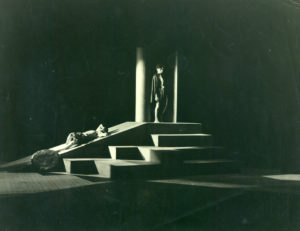
NH: I think it is more to do with the designer that they worked with – John Bury, who went on to be the National Theatre’s key stage designer later on in the 60s. He was around for a long, long time in that early period. He was one of the linchpins of the company. He was also someone that was reading widely and extremely knowledgeable about other designers globally. He tried to bring their influences into the British theatre. Again it was about reacting against what the British theatre was – drawing room comedies or light dramas, or the very beautiful, highly produced productions of Shakespeare. Bury wanted to move away from that to provide a different set of theatrical images. In the beginning there were these very stark beautifully, side-lit productions. People didn’t side light things in the way that Theatre Workshop did.

1-operation-olive-branch

Operation Olive Branch (Theatre Workshop’s version of Lysistrata)

Courtesy of Theatre Royal Stratford East Archive Collection.

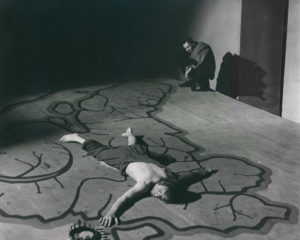
They used these shafts of light, ramps, turrets; creating quite dark, stark atmospheres. Or a map that goes across the entire stage: it still would look modern now.

edward-iiEdward II

Courtesy of Theatre Royal Stratford East Archive Collection.

That then evolved with the work. You then get these hyper-realist pieces like You Wont Always Be On Top and A Taste Of Honey to a certain extent, The Quare Fellow, which is set in a prison, they had the yard and the bars. They also used the backdrop of the actual theatre space so that it didn’t have curtains coming across as was traditional. They would use the raw brick work of the back of the stage space: all of the piping and the industry of the stage space is part of the environment.

PC: Were her working practices with designers during a production distinctive from the contemporary theatre?

NH: I think it was Ivor Dykes who was the sound engineer of Oh What a Lovely War, he said something like, “You never had dress rehearsals, never had tech rehearsals. The technical side was always developed alongside the creative side.” I think that was probably quite a different approach to what was going on at the time. It wasn’t the director saying, ‘Yes we’ll have this and we’ll have that’ but it was the designers, John Bury, and other people later on, working alongside Littlewood, making it all work organically as the process evolved.

PC: That sounds similar to how Emma Rice and Kneehigh work despite restrictions of budgeting (https://kneehighcookbook.co.uk/interview-malcolm-rippeth/). I know Kneehigh take inspiration from Littlewood and they acknowledge her as a big influence. You can see it in her first Shakespeare production, responding to the community. And 946: The Amazing Story of Adolphus Tips seems a direct descendent of Oh What a Lovely War. I think that it is fantastic for such a prominent female director and company to make those connections.

NH: There is a very similar kind of rumbustious quality about their work, certainly in Littlewood’s later work, there are real links with Kneehigh.

PC: Also their local approach, they are responding to their community in Cornwall, the continuous loop. Kneehigh obviously have huge technical scope with their productions, what were the limitations of technology when Joan Littlewood was working? You mentioned side lighting was uncommon, was that because there hadn’t been the technological innovations?

NH: I’m not sure, because I presume side lighting would have been used in dance from my limited knowledge, rather than being used in theatre productions. It was a shift to something more atmospheric for Theatre Workshop; rather than just lighting what was happening, they were moving to using lighting as something which was about atmosphere, mood, tone: part of the texture of the performance. That was different. Lighting was usually used to show the actors off in a good light, not creating the mood, atmosphere and tension of Littlewood’s theatre.

PC: Was there anyone around Europe who would have influenced John Bury?

NH: In terms of the lighting they all cite Adolphe Appia as being the primary influence and Edward Gordon Craig’s use of architectural shapes was important too.

Summary 

  • John Bury, Theatre Workshop’s designer was reading widely and extremely knowledgeable about other designers globally. He tried to bring their influences into the British theatre.
  • In the beginning there were these very stark beautifully, side-lit productions. People didn’t side light things in the way that Theatre Workshop did.
  • They also used the backdrop of the actual theatre space so that it didn’t have curtains coming across as was traditional.
  • The technical side was always developed alongside the creative side.
  • There are real links with Kneehigh. There is a very similar kind of rumbustious quality about their work, certainly in Littlewood’s later work.

Littlewood’s Shakespeare: Politics, Strong Women and Conventions

Interview with Nadine Holdsworth: Part 6

Nadine Holdsworth is Professor of Theatre and Performance at the University of Warwick. Her research has two distinct, but sometimes interconnected strands in Twentieth Century popular theatre practitioners and theatre and national identities in England, Scotland, Wales and Northern Ireland. She has worked particularly on Joan Littlewood and has written Joan Littlewood for the Routledge Performance Practitioners Series in 2006 and Joan Littlewood’s Theatre with Cambridge University Press in 2011.

email: n.holdsworth@warwick.ac.uk

Connections to the GCSE, AS and A level specifications

  • Social, cultural, political and historical context
  • Use of theatrical conventions
  • The relationship between actor and audience in theory and practice
  • Innovations
  • Key collaborations with other artists
  • Methods of creating, developing, rehearsing and performing
  • Theatrical style
  • Significant moments in the development of theory and practice

PC: How do the classic text productions fit with the continuous loop idea? Why not continue the agitprop, devised style as it were?

NH: Littlewood was a great lover of theatre in all its guises, particularly popular theatre traditions. She saw the renaissance period, Shakespeare and his contemporaries as part of a popular theatre tradition, which was about getting the groundlings in as well as the aristocracies. Creating theatre that did give back to the people the stories of their day and their immediate history. I think she wanted that epic scale of work. But it was also about moving to London and needing to do work that would get some attention, that would attract people. So those Shakespeare pieces, the Renaissance classics were being done alongside the commissions of local writers about the local railways. So it wasn’t one or the other, they were working simultaneously. The Shakespeare was about that interest in politics really. What the politics of the time were and how that could have contemporary relevance. So if you do Macbeth how can that story, about the relentless pursuit of power at all costs connect with a modern audience? What contemporary parallels might be made?

PC: Were those connections to contemporary politics explicit in the design of the classical productions or was it simply alluded to?

NH: Not necessarily explicit. In terms of the programmes there were often connections made to what was going on in the contemporary world. Those connections were made but not necessarily explicitly like doing contemporary dress sort of productions (see theatre-workshop-programmes here).

PC: Was there anything else that attracted her to those classical plays?

NH: Yes, strong female characters. She often did pieces that had strong women in them. She did The Duchess Of Malfi which was rarely done, she did a production which was called the Dutch Courtesan which hadn’t been done for hundreds of years I think and that made quite a big splash.

PC: How did the conventions of the classic texts (direct address, chorus etc.) influence how she approached new plays (new writing and devised)?

NH: In A Taste of Honey you can see how she was starting to play with those conventions. When A Taste of Honey was sent into Theatre Workshop it was a classic social realist piece of theatre, in the Look Back In Anger (John Osborne) mould. It came fairly soon afterwards. And through the process of rehearsal you get this evolution of the play into something which contains direct address to the audience, which contains a Music Hall back and forth comedy, banter between characters. You get the introduction of a jazz band on the stage and characters that danced on and off the stage in between scenes rather than just staying in character in a traditional sense. Littlewood was really moving towards wanting to break down the barriers between the stage and the auditorium and talk directly to the audience. That became an increasing part of the theatre work that she was producing from Brendan Behan’s The Quare Fellow in 1956 onwards.

Summary

  • Littlewood saw the renaissance period, Shakespeare and his contemporaries as part of a popular theatre tradition, which was about getting the groundlings in as well as the aristocracies. But it was also needing to do work that would get some attention.
  • Littlewood was interested in the politics of Shakespeare’s time and how that could have contemporary relevance.
  • The classical plays had strong female character, which was important for Littlewood.
  • Littlewood wanted to break down the barriers between the stage and the auditorium and talk directly to the audience.
  • A Taste of Honey evolves, during rehearsals, to include non-realistic conventions – direct address, jazz band on stage etc.

Littlewood, Theatre Workshop and the Move to Theatre Royal, Stratford East

Interview with Nadine Holdsworth: Part 5

Nadine Holdsworth is Professor of Theatre and Performance at the University of Warwick. Her research has two distinct, but sometimes interconnected strands in Twentieth Century popular theatre practitioners and theatre and national identities in England, Scotland, Wales and Northern Ireland. She has worked particularly on Joan Littlewood and has written Joan Littlewood for the Routledge Performance Practitioners Series in 2006 and Joan Littlewood’s Theatre with Cambridge University Press in 2011.

email: n.holdsworth@warwick.ac.uk

Connections to the GCSE, AS and A level specifications

  • Social, cultural, political and historical context
  • Theatrical purpose
  • Key collaborations with other artists
  • Theatrical style
  • Influence
  • Significant moments in the development of theory and practice
  • The relationship between actor and audience in theory and practice

 PC: I know that she enjoyed touring, did this inform her relationship with space? Did they always have ambitions to be in one space?

NH: They were touring when Theatre Workshop formed in 1945 and they toured until the end of 1952. The ambition was always to try and reach this working class audience that would completely get what they were doing but it never really happened. It happened sometimes, but mostly not. They’re touring little theatres around the Lake District and then going up to Scotland, mainly travelling around the north. The decision to move to the Theatre Royal, Stratford East was really because they were poverty stricken. They were doing one night stands left, right and centre and not able to make a living; they were living this really hand to mouth existence. The opportunity at the Theatre Royal, Stratford came up and I’m not sure what the exact arrangements were but the theatre manager, Gerry Raffles, who was her partner by that stage led the move. But the company was reluctant as they saw it as a sell out, particularly Ewan MacColl and he didn’t go with them to Stratford East. He refused and as one of the founders of the company that was a big deal. His view was that the move to London would mean that they would then be courting the critics; they’d be really small fish in a big pond, having to play the game of the commercial theatre world. He believed they wouldn’t be reaching the broad working class audience that he was really keen to try and attract. The counter argument that Littlewood presented was that Stratford East is a working class community, so rather than going out and trying to reach those communities, those people, those audiences, let’s try and work within a community. She wanted to get that local working class community into that space – the continuous loop. They did a lot of work to try and achieve that: they made lots of connections with trade union organisations: getting write ups in the local newspapers; commissioned a local journalist, Anthony Nicholson to write about the local railway industry which was a big employer in the area, a play called Van Call. So, in terms of the space, that was the journey if you like.

PC: Did they venture out much during that time in Stratford East, back to the job centre queues?

NH: No not until that shift back to the work at the end in the late 1960s and early 70s and even then it was more about animating communities through fairs and fun palaces rather than political activism in the traditional sense.

PC: So how did they get people into this new theatre out in East London?

NH: There was a distinct body of work that was done around the classics including her productions of Shakespeare, Christopher Marlowe and Ben Johnson. Again that was about responding to what was going on at the time in terms of the productions of Shakespeare; it was the time of Laurence Olivier and John Gielgud. All very much about these heroic leading figures, about the beauty of the verse being very predominant. She wanted to bring the social guts back to Shakespeare and did these amazing productions: Richard II, Edward II, she did Arden of Faversham: a little known Renaissance play. Influenced by Adophe Appia, they were very stark visually: stark, plains of light and ramps. It was about bringing the social world of Shakespeare into play; it was about political intrigue; it was about power and who has power, who doesn’t have power; how do people lose their humanity in the search for power. It was about coming out of the Second World War and responding to those big political ideas. Doing Macbeth, for Littlewood, becomes even more pertinent at the time. But she sees all these very glossy, glamorous productions of Shakespeare and thinks: “No that’s not it! Absolutely no! That is not what this is!” She was interested in the guts the gore and personal, political ambitions. She wanted to get that social world in with the Shakespearean productions that she did. Then there was another shift: she had got a good reputation for putting on these really imaginative and creative and vibrant theatrical pieces. So writers started sending her unsolicited scripts, she got sent 19 year old Shelagh Delaney’s A Taste of Honey and she got sent Brendan Behan’s The Hostage and The Quare Fellow and then local writers as well – You Won’t Always Be On Top was by Henry Chapman an actor who had started to do a bit with Theatre Workshop. It evolves, if you like, rather than there being a conscious decision to say I’m now going to do my Shakespeare. It just evolves.

Summary

  • The decision to move to the Theatre Royal, Stratford East was really because they were poverty stricken.
  • The company was reluctant as they saw moving to London as a sell out, particularly Ewan MacColl and he didn’t go with them to Stratford East.
  • Stratford East was a working class community, so rather than going out and trying to reach those communities, those people, those audiences, Littlewood wanted to try and work within a community.
  • She wanted to bring the social guts back to Shakespeare and did these amazing productions influenced by Adophe Appia, they were very stark visually.
  • Writers started sending Littlewood unsolicited scripts: she got sent 19 year old Shelagh Delaney’s A Taste of Honey and she got sent Brendan Behan’s The Hostage.